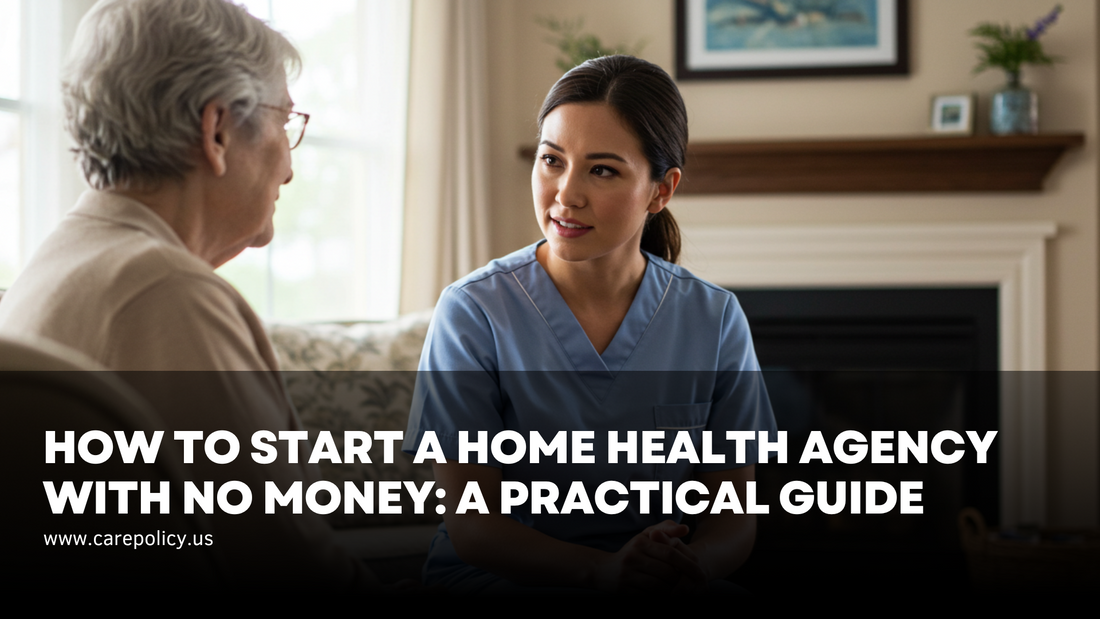
How To Start a Home Health Agency with No Money: A Practical Guide
Anton FonsekaShare
The dream of starting a home health agency can feel out of reach when you're faced with a major obstacle: a lack of capital. While it's challenging, it's not impossible. Launching a successful agency with limited funds requires creativity, strategic planning, and a relentless focus on lean operations. Here’s how you can turn your vision into reality.
1. Create a Rock-Solid Business Plan
A business plan is your single most important tool when you have no money. It’s the blueprint that will guide your decisions and, more importantly, the document you will use to persuade others to support you—whether through loans, grants, or partnerships. Your plan must be impeccable, detailed, and convincing.
Key sections must include:
- Executive Summary: A powerful overview of your mission and vision.
- Services Offered: Clearly define what you will provide (e.g., companion care, personal care). Starting with non-skilled care is often more financially feasible.
- Market Analysis: Prove you understand the need in your community.
- Marketing and Sales Strategy: How will you get your first clients for free or cheap?
- Financial Projections: Detail your startup costs (even if they are minimal), operating expenses, and revenue forecasts for the first three years. Be realistic and show how you will manage cash flow.
A powerful business plan is not optional—it's your key to unlocking funding. Don't leave it to chance. Our Home Care Business Plan Template is specifically designed for startups like yours. It provides a comprehensive, expert-approved framework that will help you articulate your vision and present a compelling case to potential funders and partners.
2. Seek Grants and Nonprofit Support
Unlike loans, grants are "free money" that you don’t have to repay. Competition is fierce, but they are a perfect source of seed capital.
- Government Grants: Check websites like Grants.gov for federal opportunities. Also, look into state and local government grants aimed at new businesses or healthcare services.
- Private Foundations: Many foundations support initiatives related to senior care, healthcare access, and community development. Research foundations whose missions align with yours.
- Business Mentorship: Organizations like SCORE offer free mentorship from experienced business professionals who can help you refine your strategy and connect you with resources.
3. Explore Microloans and Alternative Funding
When traditional banks say no, microloans can be a lifeline. The U.S. Small Business Administration (SBA) Microloan Program provides loans up to $50,000 through nonprofit, community-based lenders. These lenders are often more flexible and mission-driven, making them more willing to support new entrepreneurs.
4. Start Lean: The Private Duty Model
The easiest and least expensive way to start is by being the first caregiver yourself. Begin as a private duty, non-medical home care provider. This approach allows you to:
- Minimize Startup Costs: Your primary expenses will be business registration, insurance, and basic marketing. You avoid the immediate costs of hiring staff and extensive payroll.
- Build a Reputation: By providing excellent care yourself, you build a strong reputation and gather powerful client testimonials from day one.
- Generate Immediate Cash Flow: Every dollar you earn can be reinvested directly back into the business to fund its growth, including future licensing and hiring.
5. Form Strategic Partnerships
What you lack in capital, you can make up for in connections. Build a network of referral sources who can send clients your way at no cost.
- Connect with social workers, hospital discharge planners, senior centers, and local churches.
- Offer to give free talks on senior safety or caregiving topics to establish yourself as an expert.
- Build genuine relationships. A strong referral network is one of the most valuable, cost-effective marketing tools you can have.
6. Leverage Your Policies and Procedures
Even with no money, you cannot skip the legal and regulatory requirements. A comprehensive set of policies and procedures is essential for licensing and protecting your business. It demonstrates your professionalism and readiness to operate safely and effectively.
Starting a home health agency with no money is a marathon, not a sprint. It demands resourcefulness and a commitment to lean growth. By focusing on a stellar business plan, exploring alternative funding, and building a strong community network, you can build your agency from the ground up. Ready to take the next step? Ensure your operations are compliant from day one with our Home Health Agency Policy and Procedure Manual, or get personalized advice with a free expert consultation.