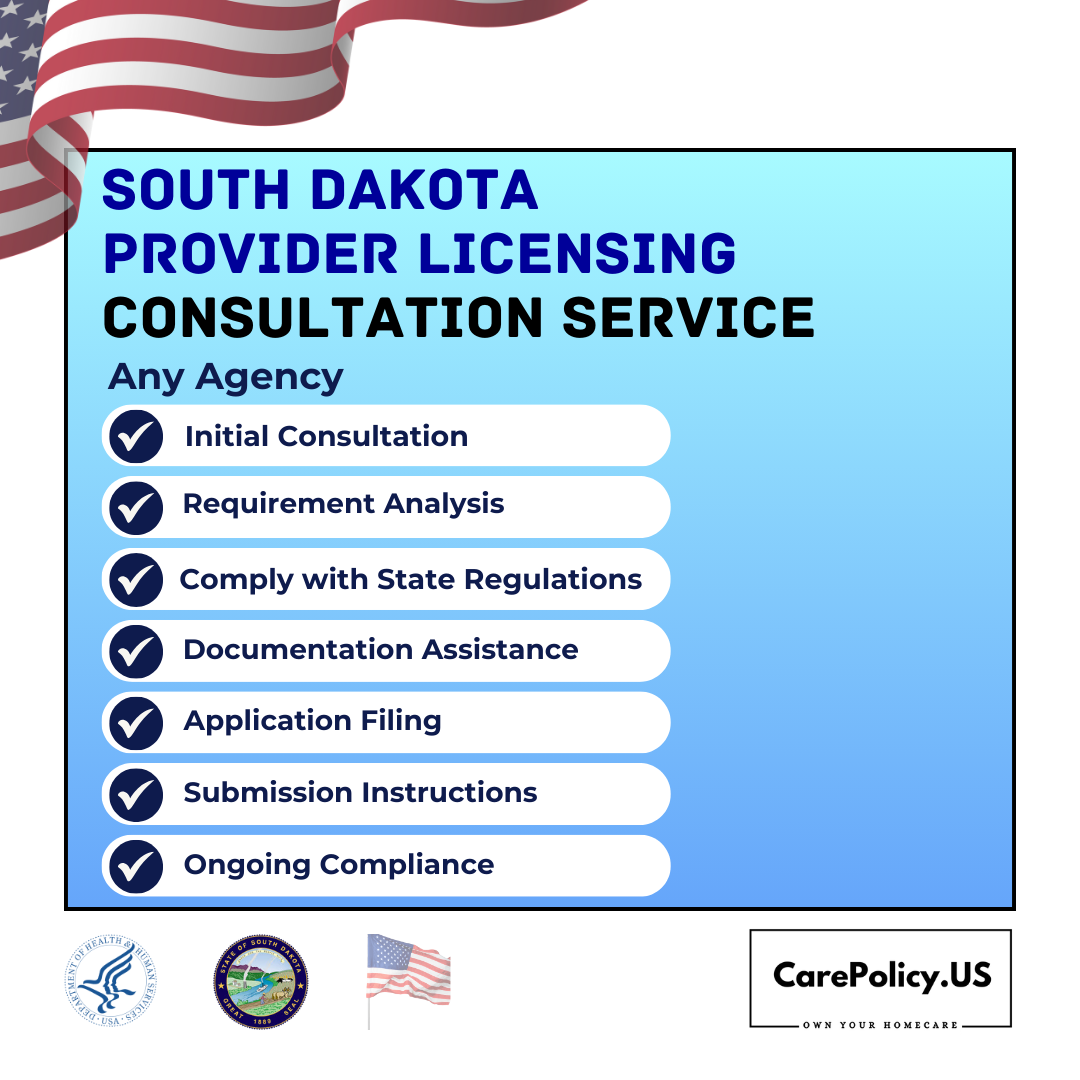
It shouldn't be too difficult to start or expand a care organization in South Dakota. You may transition from idea to licensed, survey-ready operations with the help of CarePolicy's clear, state-aligned templates and helpful mentoring. CarePolicy’s state-ready kits cover home health, hospice, assisted living, behavioral health, developmental disability services, and more. Our South Dakota provider policies, procedures, and resources map to the needs of the Department of Health, Department of Human Services, and Department of Social Services if you need compliant manuals quickly. To free up your staff to concentrate on patient care, align your policies with professional advice on Medicaid enrollment, quality systems, and daily operations.

South Dakota Licensing Overview

Health facility licensure and Medicare certification surveys for hospitals, assisted living institutions, community living homes, hospices, ambulatory surgery centers, and similar settings are managed by the Department of Health in South Dakota. For individuals with intellectual or developmental impairments, the Department of Human Services is responsible for Home and Community Based Services, such as Community Support Providers and HOPE waiver providers. The Department of Social Services manages Medicaid enrollment and behavioral health accreditation. You should expect applications, fees, life safety evaluations, background checks when necessary, policies and procedures, and a survey before or after licensing. When you need practical assistance, schedule South Dakota Care Provider Licensing Consultations to speed up approvals and minimize rework.

South Dakota Policies & Procedures Solutions

Your policy should incorporate the rules, survey tags, and payer manuals of South Dakota. CarePolicy's packages include important topics like governance, staffing, training, infection prevention, emergency preparedness, client rights, incident reporting, HIPAA, medication services, QAPI, and clinical or service delivery procedures, and they are tailored for each type of provider. Every kit comes with editable logs and forms, as well as a gap check against federal Conditions of Participation and state rules as necessary. Use them for expansion, ownership transfers, start-ups, and corrective plans. Additionally, we align your manuals with Medicaid billing rules and waiver service standards. On survey day, you will benefit from the South Dakota provider policies, procedures, and documentation in this section.

South Dakota Provider Types We Support

We create guidelines and consultation routes for groups identified by South Dakota laws, regulations, or agency initiatives:

  • Assisted Living Centers—licensed by the Department of Health.
  • Community Living Homes—licensed by the Department of Health.
  • Residential Living Centers—registered with the Department of Health.
  • Nursing Facilities—licensed by the Department of Health.
  • Hospitals—acute care, critical access, and rural emergency hospitals.
  • Hospice providers—residential or inpatient hospice, licensed and Medicare certified.
  • Home Health Agencies—Medicare certified; note that non-medical in-home care providers are not regulated by the Department of Health.
  • Ambulatory Surgical Centers—licensed by the Department of Health.
  • Inpatient Chemical Dependency Treatment Facilities—licensed by the Department of Health.
  • The Division of Behavioral Health has accredited behavioral health agencies for providing mental health and substance use services.
  • The Division of Developmental Disabilities certifies Community Support Providers under the CHOICES waiver.
  • HOPE waiver providers such as adult day services, personal care, and community living home settings.

1 product

South Dakota State Specific FAQs

How long does facility licensure take in South Dakota?

Timelines vary by build-out and facility type. Allow time for plan review, life safety, policy submission, survey prep, and federal certification. Our policy packages and checklists help avoid resubmissions and save weeks.

Are non-medical home care agencies licensed?

South Dakota’s Department of Health does not regulate non-medical in-home care, such as companionship, homemaking, or personal care. To receive Medicaid reimbursement, you must enroll under the correct provider type and follow program regulations.

What inspections or surveys should I expect?

Licensed facilities that bill Medicare or Medicaid must undergo federal certification and on-site health and life safety surveys. HCBS setting standards are also reviewed in waiver programs like adult day and community living facilities.

Are background checks required?

Yes, when applicable. Facility staff and certain licensed or certified providers must complete criminal background and exclusion checks, along with maintaining personnel files containing required training and competency records. Each package includes file audit tools and background verification routines.

How does South Dakota Medicaid enrollment work?

New enrollments begin through the online Provider Enrollment Portal, where you’ll submit organizational details, policies, and required documents. We streamline your process and prepare all paperwork for ongoing enrollment maintenance and revalidation.

South Dakota Compliance Guarantee & Support

Each engagement includes state alignment, document modification, and useful coaching. We update your set whenever payer rules or regulations change. Schedule an appointment for a South Dakota Care Provider Licensing Consultation for practical advice and receive a detailed strategy customized to your Medicaid, survey, certification, or licensure objectives. Each engagement includes state alignment, document modification, and useful coaching. We promptly update your set whenever payer rules or regulations change. Schedule an appointment for a South Dakota Care Provider Licensing Consultation for practical advice and receive a detailed strategy customized to your Medicaid, survey, certification, or licensure objectives.

Explore Other States

Not operating only in this state? We also support providers across the U.S. with state-specific policies, procedures, and licensing help.