Texas providers are expanding quickly while managing complex regulations. Our state-ready toolkits give you the confidence you need to start or grow home health, hospice, assisted living, behavioral health, adult day, or specialized clinics. Know that inside the first 100 words, you will find Texas Provider Policies, procedures, checklists for survey readiness, and practical advice on how to pass inspections. Every policy is mapped to Texas regulations by CarePolicy, which then matches it with training outlines, logs, and practical forms. We match documents to your specific license type, whether you manage a single-site agency or a multi-location network. This allows you to onboard employees, show compliance in surveys, and increase services without having to set up costly rework.

Texas Licensing Overview

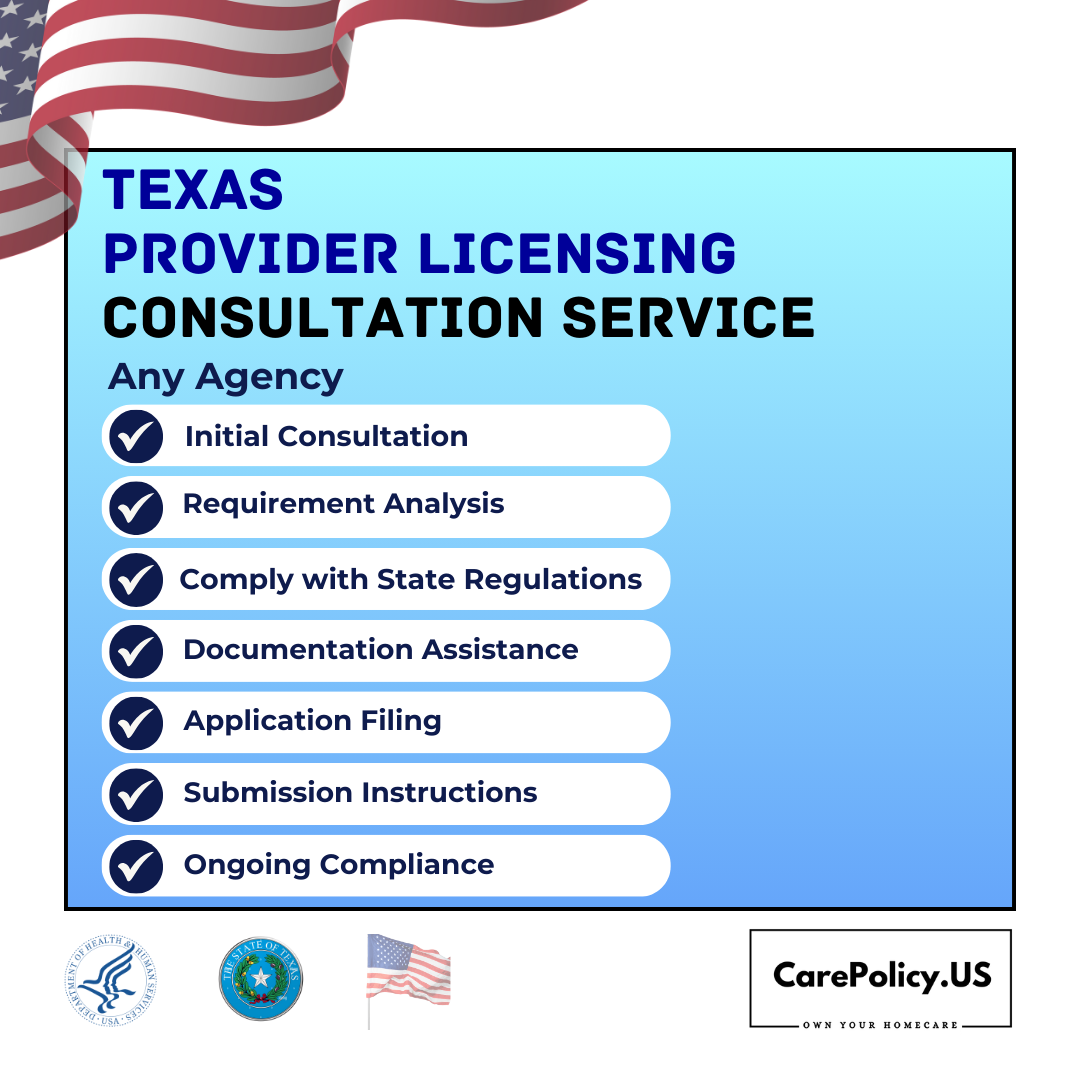
The Texas Health and Human Services Commission is in charge of regulating the majority of facility and agency licensure in Texas. Application submission via the state portals, presurvey requirements or training, life safety and health inspections, background checks, fees, and, if you serve Medicaid members, enrollment with Texas Medicaid via TMHP are usually considered core processes. In order to help you avoid avoidable delays, our Texas Care Provider Licensing Consultations convert legislation and TAC chapters into a clear, detailed strategy tailored to your provider type. This plan includes realistic preparedness timelines and document templates.

Texas Policies & Procedures Solutions

HCSSA home health, hospice, and PAS; assisted living; nursing facilities; ICF/IID; adult day and DAHS; PPECC; ASC; ESRD; hospitals; birthing centers; freestanding emergency departments; and licensed SUD programs are among the primary Texas license categories for which CarePolicy provides turnkey policy sets. Policy manuals, necessary paperwork, training matrices, and audit tracks that are in line with current Texas regulations are all included in each kit. Run our survey-readiness checklist after quick branding with our editor. Faster approvals, more streamlined inspections, and assured expansion supported by Texas Provider Policies, Procedures, and paperwork you can defend are the outcomes.

Texas Provider Types We Support

  • Home and Community Support Services Agencies—HCSSA categories: Home Health, Hospice, and Personal Assistance Services.
  • Assisted Living Facilities – Type A, Type B, and Type C.
  • Nursing Facilities – licensure and Medicaid certification standards.
  • Intermediate Care Facilities for Individuals with Intellectual or Developmental Disabilities – ICF/IID.
  • Day Activity and Health Services—DAHS adult day care providers, including individualized skills and socialization requirements.
  • Prescribed Pediatric Extended Care Centers – PPECC.
  • Ambulatory Surgical Centers – ASC.
  • Freestanding Emergency Medical Care Facilities – licensed freestanding EDs.
  • End-Stage Renal Disease Facilities – outpatient dialysis centers.
  • Hospitals—including Limited Services Rural Hospitals and psychiatric hospitals.
  • Birthing Centers.
  • Chemical Dependency Treatment Facilities – residential and outpatient SUD.
  • Crisis Stabilization Units – short-term residential mental health.
  • Residential Treatment Centers for children – HHSC Child Care Regulation licensed.
  • HCS and TxHmL Medicaid waiver program providers – HHSC certification and contracting.

Only those categories approved by Texas statutes, TAC regulations, or HHSC programs are listed. We scope policy and enrollment support appropriately if your service is unlicensed in Texas yet needs Medicaid enrollment or professional board oversight.

8 products

Texas State Specific FAQs

How long does it take to open an HCSSA for home health, hospice, or PAS?

Timelines vary by state and readiness. You’ll need to complete presurvey training, submit your application and fees, develop required policies, pass health or life safety inspections, and complete background checks. We provide documentation tools and a readiness plan to ensure a successful initial survey.

Do assisted living facilities need a survey before initial licensure?

Yes. ALFs must undergo inspections and comply with health and life safety regulations. Texas classifies facilities as Types A, B, or C based on resident needs and building requirements. Our ALF policy set includes life safety checklists, emergency plans, admission agreements, and medication procedures aligned with current TAC standards.

What background checks are required for long-term care and HCSSA staff?

Texas requires employability and criminal background checks, including DPS criminal history, the Employee Misconduct Registry, and the Nurse Aide Registry for unlicensed staff. Our templates cover annual rechecks, documentation, corrective action records, and detailed screening routines that meet surveyor expectations.

How do I enroll with Texas Medicaid after I get my state license?

Use TMHP’s Provider Enrollment and Management System (PEMS) to enroll, revalidate, and maintain records. Accurate PEMS data is required for services like managed care and LTSS. To reduce rework, we provide a submission checklist, taxonomy and NPI guidance, and complete enrollment materials.

What is driving demand for Texas providers right now?

Through 2032, Texas is projected to see continued job growth in health care and social assistance. Agencies report ongoing shortages in nursing, aide, and behavioral health tech roles. We provide competency checklists, staffing models, and retention-focused orientation plans aligned with licensing requirements.

Texas Compliance Guarantee & Support

Rules are subject to change. To keep policies, forms, and training consistent with your license type, we monitor updates and update your documentation. Through our Texas Care Provider Licensing Consultations, receive customized policies, licensing advice, Medicaid enrollment assistance, and step-by-step support. Are you prepared to proceed today? To find out your provider type and go-live date, get in touch with CarePolicy.

Explore Other States

Not operating only in this state? We also support providers across the U.S. with state-specific policies, procedures, and licensing help.